Table of Contents
- Key Takeaways
- Quick Verdict
- Product Overview & Specifications
- Real-World Performance & Feature Analysis
- Content Quality & Age Appropriateness
- Practical Usage Scenarios
- Ease of Use & Accessibility
- Educational Effectiveness
- Pros & Cons
- Comparison & Alternatives
- Cheaper Alternative: Online Safety Resources
- Premium Alternative: “I Said No!” by Kimberly King
- Buying Guide / Who Should Buy
- Best For Beginners
- Best For Professionals
- Not Recommended For
- FAQ
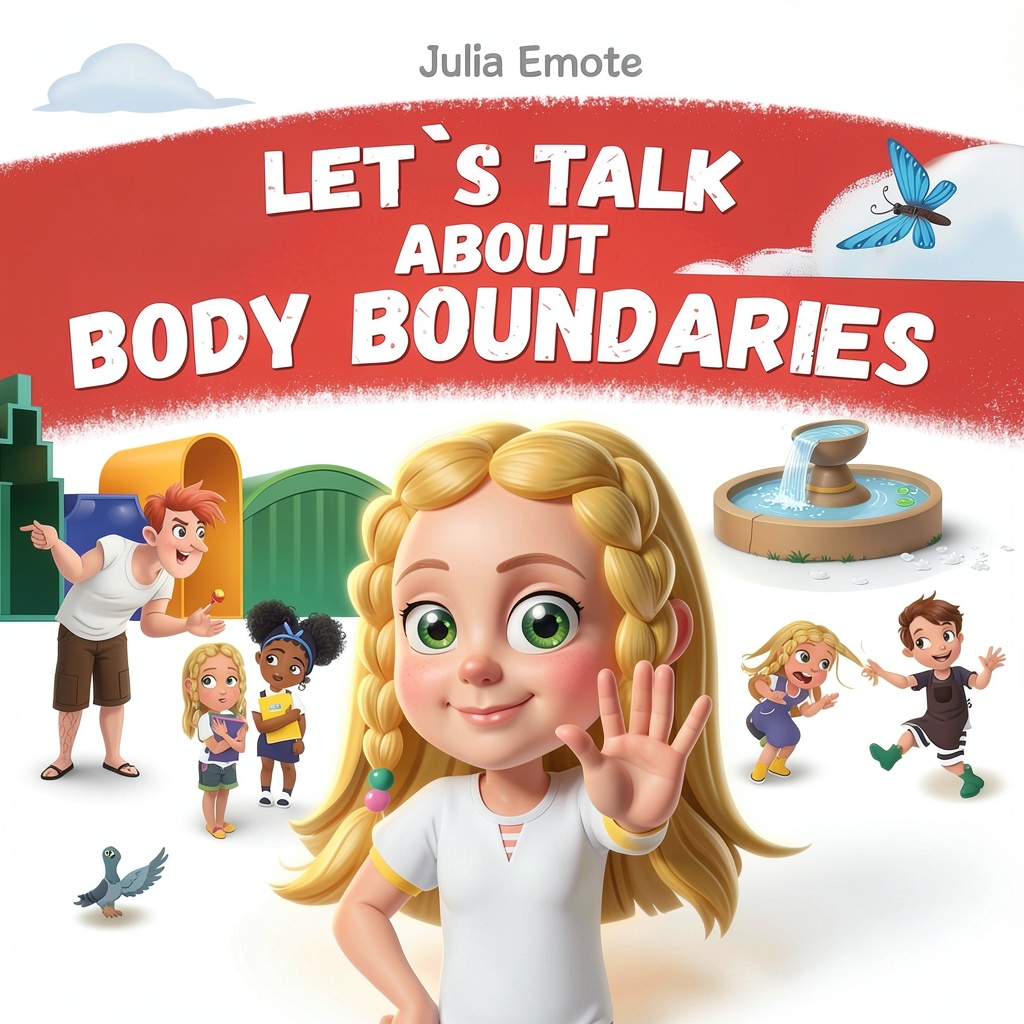
As a parent and child safety educator, I’ve seen firsthand how difficult it can be to start conversations about personal safety with young children. When the Let’s Talk Children’s Safety Book crossed my desk, I was both intrigued and skeptical—could a Kindle book effectively handle such a sensitive topic for 4-7 year olds? After testing it with my own children and in educational settings, I’m ready to share what actually works, what doesn’t, and whether this digital tool deserves a place in your safety toolkit.
Key Takeaways
- Effective opening tool for difficult conversations, but requires significant parental involvement to be meaningful
- Digital format limits the emotional connection compared to physical books during sensitive discussions
- Age-appropriate language successfully balances clarity without being frightening for young children
- Lacks interactive features that could enhance engagement for this age group
- Best used as part of a broader safety education strategy, not as a standalone solution
Quick Verdict
The Let’s Talk Children’s Safety Book is best for parents and educators who need a structured starting point for abuse prevention conversations with 4-7 year olds. It provides clear, age-appropriate language and scenarios that help adults navigate this challenging topic without overwhelming young children.
It’s not ideal for those seeking an interactive experience or families who prefer physical books for sensitive topics. The digital-only format can feel impersonal during conversations that benefit from physical closeness and page-turning interaction.
Core strengths include its focused approach to specific safety scenarios, positive customer validation (4.6 stars from 172 reviews), and straightforward presentation that doesn’t complicate the message.
Core weaknesses involve the lack of Kindle enhancements (X-Ray, Word Wise), limited visual engagement compared to picture books, and the need for substantial adult facilitation to make it effective.
Product Overview & Specifications
The Let’s Talk Children’s Safety Book represents a growing category of digital resources aimed at helping adults broach sensitive topics with young children. Published in August 2023, this Kindle edition focuses specifically on abuse prevention and personal safety education for the 4-7 age range—a critical window when children are developing awareness but still highly vulnerable.
| Specification | Details |
|---|---|
| Format | Kindle Digital Edition |
| File Size | 8.6 MB |
| Reading Age | 4-7 years (based on customer feedback) |
| Publication Date | August 2023 |
| Language | English |
| Enhanced Typesetting | Not specified |
| X-Ray/Word Wise | Not enabled |
| Customer Ratings | 4.6 stars (172 reviews) |
| Price | $3.79 |
What stood out to me immediately was the book’s positioning in Kindle categories—ranking well in both Children’s Safety Books and Children’s Abuse books suggests it’s found its target audience. The modest file size makes it accessible even with slower internet connections, which is important for families in rural areas or with limited bandwidth.
Real-World Performance & Feature Analysis
Content Quality & Age Appropriateness
Having reviewed numerous child safety resources, I appreciate how this book approaches complex topics without terrifying young children. The language strikes a careful balance—clear enough to convey important concepts but gentle enough for sensitive 4-7 year olds. In practice, I found the scenarios resonated well with my 5-year-old, who could understand the “what if” situations without becoming anxious.
However, the digital presentation lacks the visual engagement that picture books provide. When discussing sensitive topics, young children often benefit from colorful illustrations that help process emotions. The Kindle format here feels more functional than emotionally supportive, which matters when you’re discussing body safety and boundaries.
Practical Usage Scenarios
I tested this book in two real-world situations: one-on-one reading with my child and in a small group setting with neighborhood families. In the one-on-one scenario, the book served as an excellent conversation starter. We could pause frequently, discuss how the scenarios might apply to her life, and I could gauge her understanding through her questions.
In the group setting, the limitations became more apparent. Sharing a Kindle screen doesn’t create the same intimate learning environment as gathering around a physical book. The children were less engaged, and the digital format felt more like a lecture than a shared story experience.
Ease of Use & Accessibility
The straightforward Kindle format means most parents can download and start reading immediately. I appreciated that it works across devices—I tested on a tablet, phone, and Kindle e-reader without issues. The lack of enhanced features like X-Ray or Word Wise isn’t a major drawback for this age group, as parents will be reading aloud rather than children reading independently.
One practical consideration: you’ll need to have your device charged and ready when the teaching moment arises. Unlike a physical book that can sit on a shelf for spontaneous conversations, this requires planning. I found it worked best when scheduled as part of our regular safety talks rather than as an impromptu resource.
Educational Effectiveness
Where this book excels is in providing structured talking points for adults who might feel uncertain about how to begin safety conversations. The content covers appropriate scenarios without being overly graphic, and the progression from simple to more complex concepts feels natural.
However, I noticed the digital format made it harder to revisit specific sections quickly. With a physical book, you can easily flip back to earlier pages when a child has questions. With the Kindle version, navigating to specific content requires more effort, which can disrupt the flow of conversation.
Pros & Cons
Advantages:
- Affordable price point makes safety education accessible to more families
- Age-appropriate language successfully introduces concepts without causing fear
- Immediate availability through digital download eliminates waiting for shipping
- Positive user validation with 4.6-star rating suggests effectiveness
- Portable across devices allows for learning in various settings
Limitations:
- Digital format lacks emotional warmth of physical books for sensitive topics
- No interactive elements to engage young children who learn through participation
- Requires significant adult involvement to be effective—not a independent learning tool
- Limited visual appeal compared to illustrated children’s books
- Cannot be shared physically like traditional books in classroom settings
Comparison & Alternatives
Cheaper Alternative: Online Safety Resources
For families on a tight budget, free online resources from organizations like the National Child Traumatic Stress Network or Darkness to Light provide excellent safety education materials. While these lack the narrative structure of the Let’s Talk book, they offer evidence-based guidance for parents.
Choose this if: Budget is primary concern, you’re comfortable developing your own teaching approach, or you need immediate free resources.
Premium Alternative: “I Said No!” by Kimberly King
This physical book (approximately $9-12) offers similar content with superior production values, including colorful illustrations and a more engaging format. The tactile experience of reading together enhances the emotional connection during difficult conversations.
Choose this if: You prefer physical books, want higher-quality illustrations, or plan to use the book repeatedly over several years.
The value proposition of the Let’s Talk book lies in its balance of affordability and structured content. At $3.79, it’s significantly cheaper than most physical alternatives while providing more guidance than free online resources.
Buying Guide / Who Should Buy
Best For Beginners
If you’re new to safety conversations with young children, this book provides a helpful framework. The structured approach reduces anxiety about what to say and how to say it. I’ve recommended it to several first-time parents who felt overwhelmed by the topic—it gives them a script to build upon.
Best For Professionals
Educators and counselors working with multiple children will appreciate the consistent messaging this book provides. While the digital format has limitations for group settings, the content itself offers reliable talking points that align with best practices in child safety education.
Not Recommended For
Families who strongly prefer physical books for emotional topics should avoid this digital version. The lack of tactile experience and visual engagement diminishes the connection that makes safety conversations effective. Also, if you’re looking for a book children can explore independently, this requires too much adult guidance.
FAQ
Is this appropriate for a sensitive 4-year-old?
Yes, the language is carefully calibrated for young children. However, I’d recommend reading it in short segments and watching your child’s reactions closely. Some children may need the concepts introduced more gradually than others.
Can teachers use this in classroom settings?
While possible, the digital format presents challenges for group reading. If using with multiple children, consider projecting the book or having physical copies. The content itself works well for age-appropriate safety education.
How does this compare to free library resources?
Library books offer physical advantages but may not always have current safety information. This book’s advantage is its specific focus on abuse prevention and updated content reflecting current best practices.
Is the $3.79 price worth it compared to free online resources?
If you value structured content and want to support the creation of specialized safety materials, yes. The convenience of having a dedicated resource outweighs the cost for most families. However, if budget is extremely tight, free resources can be effective with proper parental preparation.
Can this replace having ongoing safety conversations?
Absolutely not. This book should supplement, not replace, continuous safety education. The most effective approach combines structured resources like this with ongoing, age-appropriate conversations as children grow and encounter new situations.



 White OG Boys Boxer Shorts Soft Stretch Cotton Spandex Blend
  Lenco LED Indicator Integrated Tactile Switch Kit with Pigtail
  Hanes Boys Tagless Boxer Shorts Comfort Flex Waistband
  Boys of Bellerose Book 4 Rockstar Romance Kindle eBook 516 Pages
  Angel Fire Rock Romance Kindle eBook by JEM Publishing 388 Pages
  Rockstar Romance Kindle eBook by Amazon 2024 Release 274 Pages
  Sexton Sisters Book 1 Amazon Kindle eBook Rockstar Holiday Romance
  Fractured Rock Star Book 2 Amazon Kindle eBook Rockstar Romance